From small chip to deep fracture
Broken Tooth Repair Options
Compare bonding, fillings, crowns, root canal treatment and extraction for a chipped, cracked or badly broken emergency tooth.
GUIDE NAVIGATION
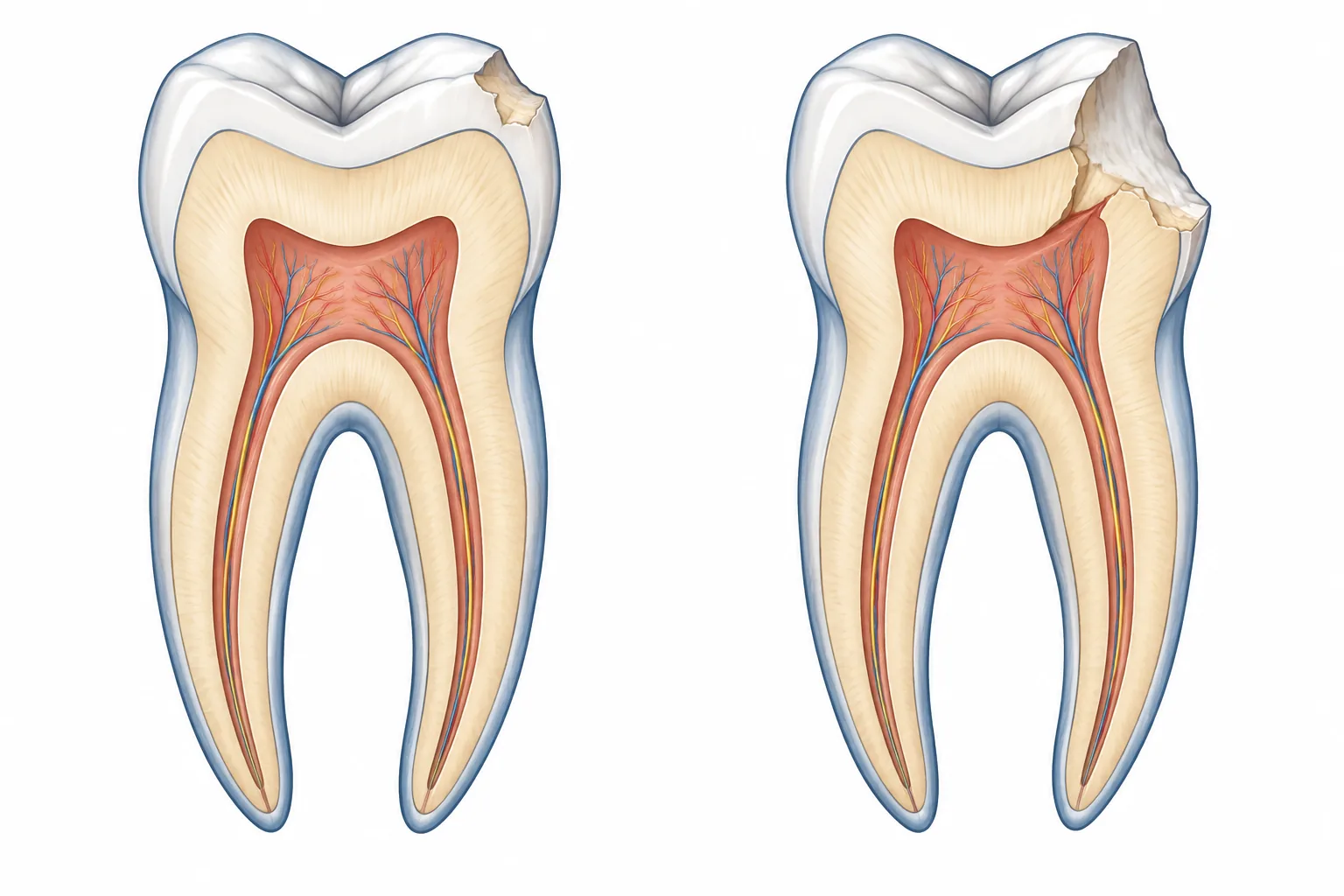
Simplified educational illustration, not a patient image or diagnosis. The pulp, crack location and remaining tooth structure all matter—not just the visible chip.
DO THIS FIRST
What to do now
- 1
Rinse gently, save any fragment in milk or saliva and avoid biting on the tooth.
- 2
Use a cold compress outside the face if trauma caused swelling.
- 3
Arrange prompt examination even if the broken tooth is not currently painful.
What to do immediately
Rinse gently with water, collect any fragment and keep it moist in milk or saliva in a clean container. Use a cold compress outside the face if there is swelling from trauma. Do not test the tooth by biting on it or use household glue.
If the injury also caused uncontrolled bleeding, suspected facial fracture, loss of consciousness or other serious trauma, seek emergency medical care.
What the examination needs to answer
The two cutaways show why a visible chip does not tell the whole story. The dentist needs to establish where the break travels, whether the soft tissue inside the tooth is affected and how much sound tooth remains to support a repair.
- Depth and location: is the damage limited to a corner, or does a crack extend farther into the tooth?
- Pulp and support: can the tooth be restored, and does the tissue inside or around it need treatment?
- Protection: which repair fits the findings, and is another visit or a specialist assessment needed?
Repair choices for a chip or shallow break
A small enamel chip may be smoothed or rebuilt with tooth-colored bonding. A larger area can require a filling, onlay or crown to restore shape and protect weakened structure. In some cases, the original fragment can be reattached.
When the tooth’s nerve is involved
A deeper fracture can expose or inflame the pulp inside the tooth. Treatment depends on pulp health, tooth maturity and the injury. Options may include protective pulp treatment or root canal treatment followed by a strong restoration.
Pain may be intense, mild or absent, so the visible depth, examination and tests matter more than symptom level alone.
Cracked tooth, split tooth and root fracture
A cracked tooth may be treatable when the crack is contained and the tooth can be protected. A split tooth with separable segments generally cannot be saved intact. A root fracture after trauma may need repositioning, splinting and careful follow-up rather than immediate removal.
Temporary protection versus final repair
A same-day visit may complete a small repair or begin a longer treatment plan. Ask whether the work done today is the finished repair or protection while the next stage is arranged.
Temporary protection
A temporary covering or filling may protect the tooth between visits. An urgent visit may also begin root canal treatment. These steps do not necessarily complete the tooth's treatment.
Ask: What still needs to be done, and when should I return?
Final treatment
Bonding or a filling may be the finished repair for suitable damage. A larger restoration or treatment of the pulp may involve further visits. After root canal treatment, the tooth still needs the recommended permanent restoration.
Ask: Which restoration is planned, and who will complete it?
Before leaving, confirm eating and chewing precautions, care for any temporary material, your next appointment and whom to call if pain worsens, swelling develops or the temporary repair comes out. Follow the treating dentist's instructions; relief from pain alone does not mean treatment is finished.
BEFORE YOU AGREE TO THE NEXT STEP
Understand what can happen today—and what comes after
Use this “Broken Tooth Repair Options” guide to organize a focused call, prepare for the visit, and leave knowing exactly what should happen next.
Separate the urgent goal from the full plan
Ask whether today’s goal is diagnosis, pain relief, stabilization, definitive treatment, or a referral. A procedure started during an emergency visit may still need another stage. Knowing what will and will not be completed today prevents a temporary step from being mistaken for finished care.
- Today’s clinical goal
- Temporary or definitive care
- What must happen next
Ask why this option fits the finding
Have the dentist explain the problem in plain language and show you the relevant image or exam finding when possible. Ask about reasonable alternatives, what could change the recommendation, and whether the tooth is expected to need a specialist. Mention medicines, allergies, pregnancy, and major health conditions before treatment.
- Finding that supports the plan
- Reasonable alternatives
- Medical details that affect care
Confirm recovery, cost, and follow-up
Before treatment begins, ask what you may feel afterward, what restrictions apply, and whom to call if recovery does not follow the expected course. Request an estimate that separates today’s care from later work. Leave with the follow-up date, referral details, and written instructions.
- After-care and return precautions
- Today’s cost versus later care
- Specific follow-up responsibility
QUESTIONS PATIENTS ASK
Common questions
Can an emergency dentist fix a broken tooth the same day?
Often some repair or protection is possible, but the final treatment depends on depth, pulp involvement, crack location, remaining structure and laboratory needs.
Can a broken tooth fragment be glued back on?
Sometimes a dentist can reattach a suitable fragment. Keep it moist, bring it to the appointment and do not apply adhesive yourself.
Does a broken tooth always need a crown?
No. Small chips may need smoothing or bonding, while larger weakened teeth may benefit from a crown. The amount and location of lost structure determine the restoration.
How do I know if the tooth nerve is exposed?
A deep break may reveal pink or red tissue or cause strong sensitivity, but appearance and pain are not conclusive. Prompt examination is important.
Can a painless broken tooth wait?
Lack of pain does not rule out pulp injury, a progressing crack or exposed decay. Protect the tooth and arrange a timely dental assessment.
EVIDENCE
Sources used for this guide
We favor patient guidance from dental associations, public health organizations, benefit programs, and clearly identified local providers.
Back to top- AAE — Cracked Teeth (opens in a new tab)
- ADA MouthHealthy — Dental Emergencies (opens in a new tab)
- Cleveland Clinic — Dental Trauma (opens in a new tab)
- NHS — Chipped, Broken or Cracked Tooth (opens in a new tab)
- AAE — Root Canal Explained (opens in a new tab)
- AAE — Root Canal Post Treatment Care (opens in a new tab)
NEED DENTAL HELP?
Tell the team what’s happening.
Call Star Dental to check the day’s emergency schedule, likely next step, benefit verification, and directions.